Here is a special treat. A guest post by my brother Wayland. He is a co-founder of The Charis Project, an officer in the United States Marine Corps, and one of the more spiritually aware people I know. A heads up: he prefers to work in shocking and uncomfortable imagery.
I spend a lot of time working through the choices thrust upon me be the sex and violence of day to day existence. Things like, what do I do now that I know the reason I don't see my students anymore is because they got sold to people who gang raped them? How do I keep the other kids I try to protect from having the same thing happen to them? Or, and this is much more banal, how do I keep the people I'm in charge of from doing something really stupid like marrying the stripper they met this weekend? Or how do I deal with my friend having killed himself after coming back from war? Or how come after doing everything I possibly can for this girl, in the most uncreepy, honest, and open way I could, it still seems like I have to use an ice pick to chisel my way through bitch mountain to get through to her?
We all face hardship and suffering, and for those of you who wish to change the world, you know who you are, the biggest sources of suffering come from the dissonance between the way things should be, which is obviously not the way things are, and the way things actually are. (Just admit it. Sh..y.) Now just try and follow the same path of self sacrifice and selfless giving up of yourself to change this and see how long it takes to, either end up drinking every night and generally feeling depressed, or, and I would argue that in this economy with gas prices the way they are this is the worse choice, becoming super conservative religious and trying to shut out all that pain with yet more small groups, even more volunteering and yet ever more advice from spiritual teachers. Not that there is anything wrong with any of this IN IT'S PROPER CONTEXT. That goes for the drinking every night also by the way. But the reason I, we, engage in these types of self destructive behavior is because we have taken our sacrifice and the love behind it and bent it out of it's proper context. Actually we have taken ourselves out of the proper context because we have fallen into the all too easy and most banally evil path of defining ourselves in opposition to what we oppose and in so doing become less than what we are.
When you really care about something, it gets really easy to define yourself in terms of opposing what is bad for it.
On a scale of twisted to perfect, that leaves us twisted, just like everything else that's wrong, including Lucifer, but I'll get to that at a later and undisclosed point. And don't think for a minute I'm about to say something about just embracing universal love and there is good in all. Find out about the girls you spent your time and effort looking after getting gang raped and see how long it takes for you to come up with new and exciting ways to dismember someone unto death and be absolutely right to feel that way.
I'm actually going to take this in a whole other direction. I'm really more interested in penetrating to the guts of the problem, and splitting it wide open to the point that it turns inside out and becomes something new. In doing so, I had to go looking for inspiration. I still find it strange that such would come from my work, which is really a lot more boring than people give it credit for. There is this concept we have called maneuver warfare, by which we seek not to kill off the enemy, but to destroy the enemy's system in key ways that cause him to collapse with as little real destruction as possible. It turns out God does the same thing.
Which means I'm about to go off in yet another direction. Those of you who know or, better yet, are mothers know what real selfless sacrifice actually is. Consider that God describes himself as a mother. He also calls himself love. Now, that word has been corrupted in the modern context to mean something more along the lines of, I love you, but…
I love you but you need to be more open.
I love you but you need to not not push me away.
I love you, but change or I can't do this anymore.
WEAK.
Or, "I care about poverty/love poor people, but we will always have the poor." Read: "I can't deal with this right now".
(What does that even mean? )
In other words the modern context of love has become hugely self centered and ends up leading us into defining ourselves and what we care about in opposition to what we don't like. Mothers, or at least good ones, know better. I'm not, nor will ever be one, but I am aware enough to see that waking up at all hours of the night to let a screaming, completely self centered little mammal literally suck nutrients out of you demands something else to be going on. Something very unselfish and rather embracing of the way things actually are and addressing them as they are, i.e. a screaming little mammal that needs to be fed.
Now, tying this back to maneuver warfare, I'm going to have to make an all too tantalizing jump into the mystical world of ideas. Ideas like, love is actually more than an emotion (it is that too, and that's totally fine) it's a choice you make. In fact it's one of those choices you make when confronted with the sex and violence of everyday existence.
This means I'm going to have to get to the point, which is that there is nothing wrong with pouring yourself out in self sacrifice for what, and who, you care about. And to make sure you don't end up being selfish about it you destroy the system that leads to that outcome. I have found the fastest way to totally overcome it all is to decide to be a slut about it. Love everything. The brokeness, the twistedness, the retrograde behavior. Try turning it on yourself if you want to get real kinky. Forgive and love everything about yourself. I know this feels strange at first, but we have to learn to take care of ourselves, you know. This works because love isn't a two way exchange between something or someone you are trying to get something from. It is a one way transformative (read redemptive) force that changes the twisted, broken things to what they, we, were meant to be. Destroy the system by embracing it and thus causing it to adapt to you, to the light that lives in you.
What better way to damage an agenda of damage than by applying a transformative and redemptive force to it. Instead of pushing away that which we are revolted by, and thus bringing it's existence into more clear relief, why don't we get right up next to it, assume that everything we hear about us being bigger, better, and more powerful is true and thus compel the that which is weaker to adapt to that which is stronger. It's a law of biology that the larger organism absorbs the smaller. It seems to work in all of life as well.
This makes dealing with your former students, if you can ever find them again, a lot easier because you can love their brokenness, and thus have any hope of changing it. You can love your friend who killed himself and leave it at that. You can love the people you are in charge of, and for that matter who are in charge of you, do your job and leave it at that. And you can love the passivity and sadness of the girl making you use an ice pick to chisel you way closer to her, which has a dramatic effect on determining how committed you are and how much you really care and actually produces positive changes. At least that is how it all works for me.
As for Lucifer? God loves him.......
Showing posts with label evil. Show all posts
Showing posts with label evil. Show all posts
Friday, November 23, 2012

Wednesday, June 13, 2012
Reality, Models, And The Legitimation Of Evil

I apologize for the language below. This is an early attempt at getting this stuff out and this is more-or-less the sort of language I think in. This is what it looks like before I have become so comfortable with it that I am almost able to use words that make sense to actual humans.
There are three things that I want to draw out of that last post on 'The Problem Of Evil." Now, these three are not necessarily the most directly significant to that post however they are foundational to that which was directly important.
These three things are: the fundamental historicity of reality, the model building nature of theology, and the way the standard approaches to the problem of evil are actually functional justifications of evil.
I have been thinking about this notion of fundamental historicity for quite some time and am yet to develop language that accurately and adequately conveys what I am trying to get at. It would not surprise me if someone else has done this. But I haven't read what I am trying to get at. There is some of the Marxist influence of "real history" in the notion but without the Hegelian dialectic. I mean something beyond the statement that "history matters." Something more along the lines that concrete history is the fundamental stuff of reality. This is not the claim that we must study history to have a proper education but that the stuff that happens is the only stuff that really is. But neither is this a physical reductionism because I include in this anything that happens whether it is susceptible to a physical reductionist analysis or not. An upshot of this is the radical limitation of our capacity for knowledge of reality proportional to actual reality. Another upshot of this is that it is what actually happens in concrete history that really matters.
Yet a further upshot of this is that theology is less a systematizing of truth than a construction of models that attempt to simplify features of reality that we happen to have access to. It is just as much mental model construction as theoretical physics is. We build idea models that attempt to draw simple lines between the features of reality that we observe. Like constellations in the sky. I would hold that this is what the biblical authors were doing just as we do it today (and this is not, in my mind, a problem for the authority of scripture.) What this means is that theology is never in the fullest sense true. It can be more or less powerfully explanatory but it is always a simplification, an abstraction from reality. It will never be the case that a theology of salvation (soteriology) will be the same thing as whatever has been effected in history. The model and the concrete historical reality are completely different orders of being (while at the same time the model has actually entered into the reality of history, by nature of it's happening, but as an abstraction it is irrevocably other than and is unable to ever equal the reality it purports to explain.)
Now some will say, "well sure that is true and tritely so." To that I reply, "then act like you believe it." Theologians ought to take on the criticism that many attack scientists with. That is the holding to dogmatic buttresses rather than searching for counterfactuals. In other words, test the model. Try to break it rather than ignoring or dismissing features of reality that are problematic. This is how actual understanding of the reality that is really out there develops.
And third, the big fault of the traditional approaches to the problem of evil is that they assert that here is a legitimate place for evil in the structure of this world. With the aim of justifying God (or building a model in which God is no-longer legitimately culpable by our standards) in light of the undeniable presence of evil, the traditional approaches take evil as in-principle given and in so doing reflexively justify evil. If God is justified in "allowing" (or whatever term makes you happy) evil then evil itself is given a legitimate place in the model's understanding of reality. My shift from this in the previous post is to take evil as a historical reality within a progression of history rather than an in-principle reality within a steady-state logical model.
So there it is. A lump of ideas that mean quite a bit to me but I am not sure if they make any difference or are even comprehensible to any one else.
Any thoughts?
Tuesday, June 5, 2012
The Problem Of Evil
 |
| Cambodian Sex Slaves |
 |
| In this June 8, 1972 file photo, 9-year-old Kim Phuc, center, runs down Route 1 near Trang Bang, Vietnam after an aerial napalm attack. (AP Photo_Nick Ut) |
 |
| Mauthausen-Gusen concentration camp |
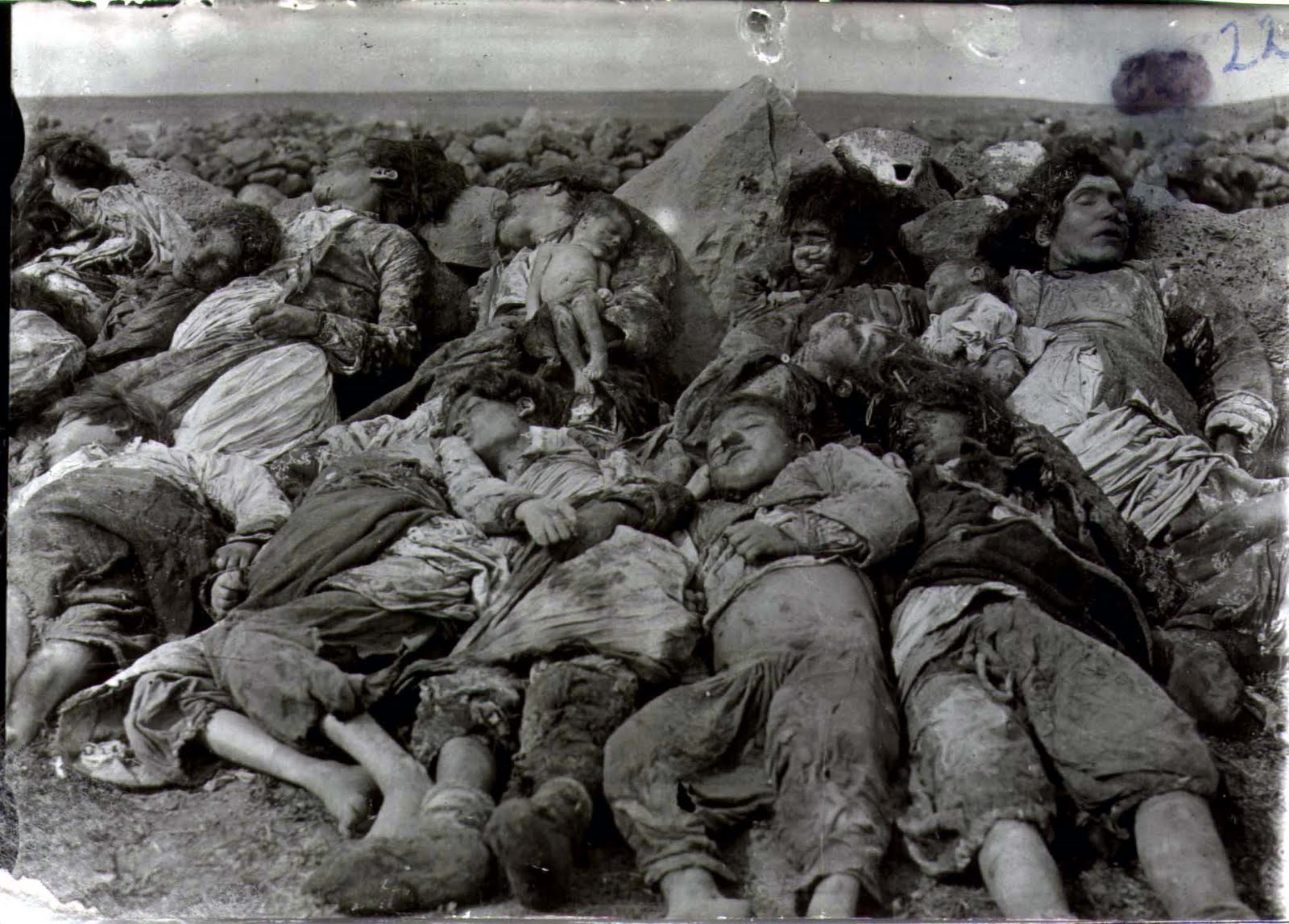 |
| Armenian genocide |
You have seen the films of people being beaten, you have heard the 911 calls of children screaming in fear that their daddy was coming and then silence, you know the reality of rape, the living death of slavery, and the indifferent retribution of institutional murder. This is all real. Don’t hide. Don’t pretend it didn’t happen. Don’t pretend that it is not happening right now as we sit comfortably by. This is the world we live in. This is the world that we allow.
Now, lets talk about the problem of evil.
First off, let us recognize the obvious: evil is a problem. It is first a problem for those who experience it. It is second a problem, at least a discomfort, for those who see it. It is third a problem for belief in a wise, powerful, loving deity.
Now, allow me to disabuse you of a stupid vile lie. Evil is not a concept. It is an historical, existential reality experienced to one degree or another by the totality of humanity. This is an important point to make. The natural habitat of discussions regarding the "problem of evil" is academia. Theological and philosophical journals. University seminars. Faux intellectual gatherings in coffee houses. Timidly poked at by youth groups and bible study groups. The discussions are generally engaged in by people sufficiently free of the grosser effects of concrete evil to have the leisure to have such discussions. And, having had my own time in such situations, the discussion is much simpler to have if actual evil as experienced by humans is reduced into a semantically contained term that can then be logically manipulated to explore different theories. The problem that should be obvious it that what is being discussed is a concept and not the actual evil that is the actual problem in the actual lives of the actual humans.
Keeping that in mind, if you forget just go ahead and remember that somewhere in your neighborhood a child probably is being molested as you read this, let us look at the discussion.
Evil is a practical problem and it is also a philosophical/theological problem. There is a strong sense in which the philosophical/theological discussion of evil is a stupid waste of time. By far the dominant witness of Christian scripture is that evil is something to be resisted, attacked, fought, and overcome rather than discussed. Discussion does not actually feed starving people or protect someone from being hacked to death with machetes. Nonetheless, we have the book of Job, which is entirely devoted to discussion of the problem of evil. Also, our actions in this world are significantly affected by our understanding of reality. So there is a place for and value to discussion. However we must always remember that we are actually discussing babies being raped and not an abstract concept.
The theological problem of evil arises when we see the evil in the world and try to believe in a powerful, wise, and loving deity. If we drop one of those three factors the theological problem disappears. Either God is not powerful enough, or not smart enough, or not loving enough to stop Pol Pot from killing most of Cambodia.
There are classic Christian traditions that have gone for each of these options depending on which factor they were most willing to lose. The absolute sovereignty, "God is in control" tradition lets go of a loving God. The free-will position significantly modifies the power of God. There is even a tradition that God is figuring it out as he goes along. Interestingly enough, that third is by far the minor position historically speaking. Christians have been more comfortable giving up God's power or love than giving up God's wisdom.
Briefly, here are some of the basic problems with the first two (the third is so rare that I don't really care to address it.)
If God is in control then all that happens is the effective will of God and every particular about the actual happenings of this world are his intended actions, thus his responsibility, thus God does evil. The response to this is that from God's perspective it is not evil. And to that I reply, from Hitler's perspective Auschwitz was not evil. This reply is more rhetoric than substance but it points in the direction of substance: if God's perfect will is done now then what is there to look forward to in heaven where his perfect will will continue to be done?
If evil is the result of free-will then we are completely responsible for all of it. Not just the bits we have individually done but all the bits that we have allowed to be done and implicitly endorse by the products we buy, by the people we walk past, by not going to the danger zones and stopping it. As far as this goes I am more amenable to this position than to the first. But, it does not really let God off the hook because it was him who gave us free-will to start with and thus implicitly endorses our free-will.
I think that the theological problem of evil presented in the classical mode is intractable given the actual incidence of evil in the world. I believe that part of the reason for this is the conceptual playing ground. It places an abstract model of God, humanity, and evil as primary. It implicitly rejects these as primarily concrete historical realities. (Here is quite a decent post on both the value and the practical inapplicability of models. It is specifically dealing with scientific modeling but the same principles apply here.)
I think that one of my biggest problems with the classical approach is the way it seems to be attempting to justify evil, that is to give it an acceptable place in this world. One should never justify evil. Evil is always evil and never good. And as such attempts to justify it should be regarded as supporting evil.
The writer of the book of Job essentially concludes that God doesn't do evil but that the situation is just too complex for us to fully make sense of. However, that author does paint an interesting picture of God fighting mythical chaos monsters as an illustration of God's will toward the world and humans. I think that the key thing here is the fight. It is the historicity of fighting.
As I have indicated elsewhere, I tend toward the position that God has formed this world out of chaos and commissioned us to participate in the completion of this forming. I mean this in a historically concrete way. Out of chaotic dissolution God has brought a significant degree of order and has brought us into being to be his means of completing this ordering. The key here is that this is ongoing in concretely historical terms. It is a project not yet complete. The classical modeling of the problem of evil assumes a steady-state philosophically abstract/eternal structure already in place. It is lodging livability complaints about a building that is still an active construction site.
Evil really is evil. This world is still a mess. But we have been commissioned and empowered by the master builder to participate in his project, to realize his master plan. As we do this in the concrete historical actions of our daily lives, in the shit and the blood of this incomplete earth, as we bring light and life and set both the slaves and the slavers free and bring true reconciliation between rapist and raped and both feed the hungry and create the systems that keep famine from happening, then we are actively solving the real problems of evil.
Some further thoughts on some of the things I have said in this post can be found here.
Saturday, March 10, 2012
Shameless Foundations: Part 4-God's Position
Part 1
Part 2
Part 3
So God must be pretty pissed off at us for screwing up right? If we listen to much of the tradition that is what we would gather. This tradition does not act out of mean intent. Rather out of a desire to build the glory of God. However, the tradition has taken as its model of glory an understanding that has arisen out of the chaos that we have become subjected to.
Inadvertently, and with the best of intentions, the tradition has portrayed the glory of God as a petulant seven-year-old: "I made this and it is mine, now you messed it up, so I am going to play mean now." As if God is so insecure that he would have a tantrum. As if the Creator of all worries about his rights.
God doesn't need our defense of his glory to feel good about himself.
Remember in Part 1 I mentioned the dangers of turning God into a set of principles and deriving an ideology from those principles? This is a case in point.
The traditional notion of God's glory and what it means to us comes out of a set of supposedly ultimate principles that are supposed to describe the concept of God. First, I see no good reason why God should either have to or even want to conform himself to a set of principles that we have set up as conditions for us to conceptualize him as God. Second, God can do what God wants to do. The Creator of all has no obligation to behave in ways that we set out for him.
So our only really legitimate course of action is to look at what God does to figure out the the way God behaves.
When we look at this we do not see a petulant child. We do not see a God who says, "You messed this up, screw you all."
When we disobeyed and ate from the tree that God had commanded us not to he didn't slam down in a bolt of lightening and beat the crap out of us. He talked to us. He took us seriously enough to ask us what was up (as if he didn't know) almost as though he actually did intend to work through and with us to get his plan accomplished.
He comes into the garden and asks, "Hey, where are you guys?" We were hiding and said so and said that we were hiding because we were ashamed that we were naked. We had not been ashamed before. God knows this and asks "Who told you that you were naked?" And goes on to observe, "Oh, you must have eaten from that tree, why would you do that?" Our response its to start passing the buck of blame. Our primordial understanding of the character of God lacked the revelation of God's care for and committed interest in our well being. I have always wondered, in light of the span of the later story what would have happened if we would have, instead of passing the blame, said, "I screwed up. I disobeyed you. I did what you told me not to do. I should not have done that."* However this is not what happened. We persisted in our resistance.
Now the unfortunate results of our disobedience are not at all out of proportion to that disobedience. God doesn't destroy us. God doesn't beat the ever-loving crap out of us. God didn't impale us and stick red hot pokers in our eyes. God had designed and commissioned us to carry out his plan of bringing this world to completion. To go out and subdue the chaotic and futile earth. We rejected the connection that would have enabled us to carry out that plan. God merely released us into the world to experience for ourselves the chaotic futility that he had designed us to overcome.
He releases us but he does not reject us. Rather than berating us for our stupid insistence on the evils of nakedness he gives us clothes. And he lets us die rather than live forever in our subjection to futility.
We find a similar sort of story with Cain and Abel. And then we go out and multiply and fail to subdue the the chaotic futility. Rather, we wholeheartedly contribute to it. God had made us to complete this world because he wanted it completed and he wanted to do it through us and we were tearing it apart. In frustration and regret God decides to start over. Take it back to before the garden and then decide whether to try again.
But no. He finds a way to keep this plan on track. There is at least one person who is willing to obey him. God says, "I can work with that. We can try to reset to the garden with someone who is willing to obey."
So, Noah and the Flood.
After the reset, God reminds us that we created us for and recommissions us, but it is different this time, "Be fruitful and multiply; increase abundantly on the earth and multiply on it." There is no subduing. The breath is gone from us. We have not the power to carry out our full purpose. God is just hoping for obedience at this point, but with his finished earth final goal still fully in view he decides that if it gets this bad again he will figure out another way to get his plan done than flooding out the world.
What can we say about God? He is committed to overcome adversity in order to get his plan accomplished. This plan is for the completion of the world. He created us as central to getting that plan done. He is committed to us and getting us back on track with the ultimate plan. Our place in that plan involves a radically tight bond between us and God. Our disobedience to God endangers that bond.
This is the conclusion of this series. In the next one we will look at how God interacts with us to finally accomplish his grand strategy and get the completed world filled with humans, fully alive and in radical union with him: his very presence in this world.
*This interaction points right back to Part 2. Nudity is not the point. God himself makes the conclusion: "Who told you were naked....you must have eaten from the tree, you have clearly come to your own conclusions as to what is good and what is evil and are obeying that in opposition to obeying me." (Obviously this is an extension of the text, but it is fully warranted and right as well.) We had set up our own system of morality and were obeying that rather than God. We can obey a system of morality or we can obey God. Not both. This is important. Notice that we were naked before we gained the knowledge of good and evil. It was only when we gained that knowledge that we decided that nakedness was bad. Before we gained that knowledge all we had was "Yes, Father." The very notion of good and evil was meaningless. When the totality of our assessment of action is limited to "Yes, Father" the categories of good and evil have no content. In obeying a system of morality, a law, we are withholding obedience to God and giving it to another.
Friday, March 9, 2012
Go Forth And Conquer
The majority of humanity operates at the level of reptilian stimulus-response, this includes Christians. "There might be danger so we should hide." There is pain in the box so we take our hand out. But this is death.
We stand blinded behind our walls of protection. Walls that we have constructed to give us a sense of security in the open world that we find ourselves in. We build walls so that we can see that we are "in," so that we can touch and handle our "assurance of salvation." Like a medieval city that acts like it were under siege, we get sick and diseased as if the siege were real and we invite any passing army to fill the void around our walls.
Our only assurance of salvation is God's promise of victory. If Jesus is for real and the incarnation true then to participate in Christ is is to participate in the way God wins the victory. The actual redemption of this world involves radical pouring out, aggressive identification, and ultimate commitment. Our survival depends on this
The chaotic evil that pervades this world is not a conceptual problem to be understood but a practical problem to be annihilated. We are engaged in a war of conquest for our inheritance. Our success depends on us constantly engaging. Attack, attack, attack! Shine the light, Shine the light until there is no darkness. Go out and fuck shit up because when we hide in apparent safety we lose.
This is the movement of the Spirit: to bring the Kingdom of God on earth, and those who are of the Spirit live by the movement of the Spirit.
The Father has given the inheritance, the Son has empowered the inheritors to take possession, and by the Spirit we go forth and multiply and subdue the earth, bringing the creation and redemption to completion. And we look like Jesus as we do it.
Thank you DLM for writing this post. You have helped to re-catalyze my understanding of why we do what we do.
Thursday, March 8, 2012
Shameless Foundations: Part 3-Things Go Wrong
Part 1
Part 2
So God chose to make this world and put us in this world. God has largely ordered the cosmos out of his primordial lump of chaotic stuff but a significant degree of disorder remains. Into this he decides to carve out a a bit that looks remarkably finished. Into this corner of the world God then sticks creatures that are made out of the stuff of this world and makes them alive by putting his own life into them, making these creatures become his own very presence in this world, not above this world but in this world. He then makes clear why he made these creatures with a great commission: "Go out from this corner, become numerous, and bring this world to completion."
And then we ate a bit of fruit, started blaming each other, and lost the ability to do what we were designed to do. Instead of us going out and bringing the chaotic futility in the world into useful structure, we went out and became subjected to that very futility.
Now, even though we had the breath of God in us that gave us the sort of life force that would enable us to carry out our commission we did not have all that was needed. However much of himself God put in us was enough for us to do our job but we still needed instruction on how to get that job done. We can see our lack of knowledge in that God gave us a command: "do not eat from the tree of the knowledge of good and evil, if you do you will die." This is something important that he seems confident that we would not know otherwise. I don't think that this sort of lack of pragmatic knowledge about what may be dangerous in the environment is all that is going on. It would seem that God's direction to us to "finish the earth" would indicate that there is a completed state that God is expecting. Furthermore, it appears that he has some manner of strategy whereby to achieve it that he hasn't built into us, neither into the earth stuff he made us out of nor into the bit of himself that he put into us. So to be successful at the purpose for which we were designed and put on this earth we would need to obey God.
Okay, wait. Where did this obey stuff come from? Remember that this story does not necessarily intend to be a historical account of some dude named Adam and his hot broad Eve and whether or not they had bellybuttons. The primary point of this story is to get at what is going on in the world in terms of God, humans, the rest of the world, how problematic the world is, and that the world is at odds with how we expect it should be. So the tree might not actually be a magic apple tree that takes away our superpowers. It may just represent something else. Now remember that the tree is not the tree of evil, we do not consume evil by eating of that tree. It is the tree of "the knowledge of good and evil." Knowing both good and evil. Consuming this "fruit" is taking into ourselves the distinction of good from evil. We gain our own understanding of right from wrong. We have a term for this: systematized morality or ethics. Why is it that this would lead to death?
Well, remember the thing that I haven't mentioned yet? There was another tree in the garden. The tree of life. Remember what made us living beings? God breathing into us his Spirit. In the two trees the story places these two things in opposition: knowledge of good and evil (ethical regulations as such) and life (being the very presence of God in the world.) Now, God is not us, God made all of this, and God has a plan and strategy for how to finish what he has started. For us to know what this plan and strategy is he has to tell us, for us to execute God's plan and strategy we need to obey him. If we are obeying a set of ethical regulations are we obeying God? No, we are obeying a set of ethical regulations. If we are not obeying God and his strategy and plan for this world are we truly his presence in the world? No, in disobeying God we set ourselves over against his plans for the world and in doing so we lost that which made us alive (the tree of life, the breath of God), that which made us the very presence of God in this world. Having lost that life force by which we would have been able to subdue the useless chaos of the not yet complete creation, we became subjected to its futility.
Out in the chaos of the world, unable to break free of the stupid futility, useless chaos and weeping and wailing and the gnashing of teeth.
Part 4
Thursday, March 1, 2012
You Don't Get To Choose Your Cross: Part 2
Here is Part 1
And here is where it gets good:
We must neither cower in illusions of perfection nor capitulate to unrighteousness. Rather, continually recognize the contradiction into which we have been thrust, the true intolerable confluence we embody. We must throw ourselves into the struggle for it is in the very midst of this struggle that we are a witness. It is here that the judgement of eternity falls with creative power on the sin of the world. This is living redemption, subversive and creative.
To give an image from parenting: an example of perfection is of no value to our children since they themselves are not angels, as well, capitulation to destruction is a disservice to them since they are alive. Rather, they deserve to see the struggle and learn to fight the fight of a forgiven sinner, of a wounded soldier who will not leave the battle because they are the breath of God in a broken mind, the fiery core in a wayward heart, the very presence of God in a suicidal world.
We live the struggle in full (though through a mirror dimly) view of eternity. That fundamentally alters our current reality. The pain of the struggle becomes not something to be reflexively avoided but rather a powerful elixir to be wisely engaged, like climbing a mountain or giving birth. We embody the brokenness of the world and the light of eternity, birth-pain is inevitable and in it we are born along with the new heavens and the new earth.
God, in his love and wisdom, has placed us in the world, in this intolerable situation. He has however called us to not be of this world. What can this possibly mean? We are sent neck deep into the quagmire in order to be an actual presence here that is not of this place.
What can this subversive redemption be while we remain active if unwilling participants in the brokenness of that which we are sent to redeem?
We embody the contradiction, the intolerable confluence of life and death and it is in and out of this struggle that redemption becomes concrete, that the love of eternity comes into the very dirt of this world.
Tuesday, February 28, 2012
You Don't Get To Choose Your Cross: Part 1
We have recently been exposed to the shortcomings of Apple and their subcontractor’s treatment of labor. And I am a little surprised that I have seen no commentary from my “social justice” friends (who mostly use Apple products.) So I will let loose on this aspect of “justice” and our situation in the world. Now these revelations are nothing new nor is the situation by any means limited to Apple. It is pervasive. At nearly all levels of production. In this real world no one gets their “stuff” without someone being abused.
We are all inextricably enmeshed in the banal evil of the world, even if we do not kill, steal or commit adultery we remain fundamentally complicit in maintaining oppression, slavery, wholesale murder. By living in the world we unavoidably participate in the systemic sin of the world. If we as Christians do not find this intolerable it is because we have consumed the opiate of religion.
Some will object: If this is true, how then did Jesus ever avoid sinning in his lifetime? This is not an attempt to avoid addressing the sin of this world and what we might do about it, but really question about what is and is not sin. It cannot be "a sin" to unavoidably participate in the systemic sin of the world. Our specific actions have to be sinful, or not, but we cannot be systemically guilty of sin in this way without also indicting our Saviour.
To this I would ask: to what extent did Jesus bear our humanity, to what extent was he one of us, to what extent then are we now in him? To the extent that Jesus was a Jew, he was under sin (Rom. 3:9), to the extent that Jesus was part of everyone he was under sin (Gal. 3:22, yet, nevertheless he is God's redemption from that sin) and more pointedly, 2Cor. 5:21 "God made the one who did not know sin to be sin for us, so that in him we would become the righteousness of God." This is not in my mind a conclusive refutation of this concern, rather an observation of a greater complexity at work. The issue remains problematic on many levels. However I do not have this concern. I do not necessarily have a problem with Jesus implicitly participating in a form of sin common to all humanity yet fully obedient to the Father and furthermore declared righteous by the Father and in so doing opening redemption to all of humanity that too is found under sin. I do not depend on getting all of Jesus' "A's" imputed to my report card, rather I hold to the righteousness declared over me by the Father on the basis of Jesus' obedient faithfulness.
Others may question whether we really are inextricably enmeshed in the banal evil of the world.
This is the banality of evil that I mean. I am no Marxist but the capitalist reduction of humans to units of production and consumption is hardly righteous. The purchase of corn or soy products empowers economic and environmental oppression. The purchase of gasoline supports evil regimes and bio-fuels have more than doubled the price of food globally leading to starvation. The vast majority of cotton, chocolate, coffee comes on the back of slavery. The purchase of any commodity that has exploitation in one of it’s production regions supports that exploitation. Our taxes support not only the good of our governments but also the evil.
The situation is much more complex and interesting when you remember that making money, trading food, using gas, etc... all also help people prosper and are significant means with which to treat each other with kindness. We work to be good while unavoidably participating in evil.
Here is Part 2
Subscribe to:
Posts (Atom)
