Showing posts with label theology. Show all posts

Wednesday, November 5, 2014

Is That Biblical?

Photo Credit: this photo is from the cited article

First, read this:

http://www.missionfrontiers.org/issue/article/god-of-the-thai

I live in Thailand working with The Charis Project. So I am part of some of the missionary discussions around this article and the parallel discussions about different evangelism strategies. There has been some profound backlash in some circles. Accusations of syncretism, departure from Biblical truth, etc. Here is one comment:

Very disappointing read!!!! The author's mindset would be comparable to saying the reason all the Ninevites repented is because Jonah crafted his message to fit the culture of Ninevah. Come on, I am all for contextualization but let's think a little more Biblically and Theo-centric.

Now there are many problems with this comment but I am not about to address them here. I cite it here because it is demonstrative of a particular method of assessment that I disagree with.

From the discussions I have seen, I believe that the commenter is saying that the evangelism method that the author of the article is advocating is not Bible-centered because it is not centered on the Bible as the ultimate truth to which all other cultures are opposed and so Christianity must be preached using only explicitly Bible words and images and cultural practices. Moreover, it seems that he does this entirely neglecting that the Bible is a highly encultured collection of books and that it was not written in English or to English idiom and that he has already reenculturated it from it's original context into a Protestant and western reading.

It seems to me that the Bible gives precedent for exactly the sort of evangelism the article speaks of. This is what Paul did in Athens. The difference appears to be that where Paul’s attempt failed the same style of evangelism is succeeding in Thailand. Moreover I believe that evangelism is about growing the body of Christ rather than forming people after he image of Western Christendom.

To me, a far more important point is the way we assess the method of evangelism advocated by the author of the article.

I advocate giving a priority to a reading of scripture whereby we learn from the methodologies recorded as spirit led. This means that we would look to scripture to get a grip on how those who it records as being led by the Spirit went about coming to the conclusions they came to and then treat it as a training manual for us to learn the same methodologies.

With this in mind we should look at the first council of Jerusalem recorded in Acts as a case study. Here we have in scripture a record of Spirit led assessment of mission. The issue at hand was fundamental to the young Church’s doctrine of salvation: could Gentiles be included in Jesus’ reconstitution of Israel in himself as Gentiles or did they have to become Jews in order to be included? Remember, at this time there were no Christians. The followers of Jesus were a Jewish sect and to them the following of Jesus and his whole reconstitution of Israel project was strictly a Jewish happening. And then Peter goes and preaches to Cornelius’ household. And the Spirit comes. On Gentiles. While they were still Gentiles. This presented a problem since to them this Jesus thing was Jewish. Thus the council. So what did they do? They listened to the testimony of a credible witness about the event. From this they concluded that since the Spirit came on Gentiles the same as the Spirit came on Jews God didn’t seem to hold the same doctrine that they did. Because of this they shifted their doctrine and recognized that Gentiles could very well be members of Jesus as Gentiles. Now this is very important. In technical terms they let experiential pneumatology take precedence over soteriology. The observation of the outbreaking of the Kingdom of God trumped their doctrine of salvation.

This scriptural case study seems to me to directly bear on the testimony of the author of this article. To be in keeping with apostolic methodology we should look at the testimony and be ready to have our preconceived doctrines of how God is supposed to work trumped by the outbreaking of the Kingdom. And, we in fact find exactly this outbreaking in the Thai communities the author speaks of. Our Biblical response then is to recognize the effectiveness of the method of evangelism as taking ground against the futility and chaos of this world and to accept these Thai people following Jesus in their Thai way as our brothers and sisters in Jesus.

An admittedly not so charitable question that comes up in my mind is whether those who oppose the evangelism witnessed to in the article have a sufficient working knowledge of the Spirit of the living God to be able to recognize him when he shows up where they did not expect to see him?

As a post script, I wonder how this apostolic methodology would work in the debate over the place of LGBT folks in the Kingdom? But, I will leave that question to those of you for whom this is already an active discussion.

(Side point on the article: in discussion with some of my Thai pastor friends it appears that the historical background that the author cites as the basis of the difficulty really isn't an issue as even though they are highly educated they knew nothing about that religious/political conflict. From their perspective that historical background is a non-issue.)

Tuesday, April 8, 2014

What Are We Going To Do Tonight, Brain?

In 1999 I met Jeff Hammond. My brother, Emmet, and I had traveled to Indonesia to “research ministry opportunities and help out however we could.” Some friends in Australia had introduced us to Jeff and encouraged us to connect when we got to Jakarta. So, some flights and busses and taxis and emails and phone calls later we sat in a restaurant in a “suburb” of Jakarta with Jeff and his wife Annette. After a few pleasantries “the question” came up as it always does when expats and missionaries and such meet overseas.

“So, Jeff, what are you up to?”

“Taking over the world.”

No hyperbole, no humor, no arrogance, just completely serious. On the day-to-day Jeff was working throughout Indonesia building unity among the different denominations at the local level with a concentration on grace, prayer, and signs and wonders. But this was a stepping-stone toward the real goal of “taking over the world.”

Hearing this man say this set me free. Anything less than total global domination became too small of a strategic goal. This attitude integrated nicely with my developing kingdom theology and open, progressive, quasi-universalist eschatology along with my burgeoning rejection of the neo-platonic underpinnings of some of dominant Christianity’s beloved doctrines.


Let me tell you a story.

At the beginning God brought this world into being. He did this because he thought it would be worth doing. He formed and sculpted the world doing, by his standards, a good job of it all along the process. Till at one point he said, “Yah, that’s pretty good I reckon. I am about done with working on it from the outside. I will now get in there and finish the work.” So God made humans to be his own idol of himself, to be his very presence in the world and put his life and power into them so that he could finish what he started through them. To have them go out and subdue the earth, to finish forming the formless and filling the void.

A significant problem developed when the humans set up an abstract system of rules about fairness over against mere direct obedience to God. They obeyed the rules as if the rules were God. So, to protect the as yet unfinished world from accelerated damage, God removed his life and power from them and the “complete the world” project went on hold. The whole earth has been groaning for that life and power to return so that it could finally be completed and actually get started with its real story.

For thousands of years God worked to disabuse the humans of their infatuation with law and judgment and to retune them to grace and obedience. Finally he put his own image back in the world again to decisively and concretely enact his own obedience and grace in the history of the world. The result being that the presence and power came again into those humans who accepted that grace and obedience and finally the stalled completion of the world got back on track.

We now work in grace and obedience for the fullness of creation. Not bound by law and judgment but filled with the life and power of God to complete what God has begun.

Now, a consistent problem with all theology is that it is problematic. Every way of telling has it’s problem verses. What I like about this story is that it provides a robust explanatory matrix that significantly shifts perspective on a number of historically intractable problems ranging from the problem of evil to foundations for evangelism given the universal grace of God to the paradox of continuity/discontinuity in the movement from “Old” to “New” covenants. But what really gets me about this story is that it is truly and deeply beautiful. The other thing is that it provides an organic impetus (nearly as a categorical imperative) for “mission.” We all know that mission is important but we seem to be at pains to say why in a way that doesn’t continue to feel like it is tacked on rather than absolutely fundamental to our very existence. In this story salvation and mission and calling and existence are absolutely inextricable. We as humans exist to be the very presence of God in the world to complete the creation that is still “under construction” and in Jesus we have been reinstated as that presence to fulfill that calling and re-empowered to live the mission to all the world.

In this telling, evangelism and discipleship cannot separate. Rather, our fundamental human purpose dictates that all our life, including our human interactions drive toward the completion of creation. When It comes to other humans we work to empower more competent world builders. From this perspective evangelism and discipleship are exactly the same thing. So we go out and preach the gospel in all things because that is what Jesus commanded us to do and also because the gospel is the power of God, living and active, the salvation and freedom and empowerment to competently and consciously participate as wholly engaged and alive humans, integrated images of God, ushering in the New Heavens and New Earth, the completion of this world.

We have been given the honor and the responsibility of materially participating in and contributing to the completion of creation. I want to see what happens when the creation is complete and the real story gets rolling. I look forward to the resurrection so that I can get in on that story. I work now to invite and equip as many as I possibly can as well as I possibly can to be world creators, like our Father, together with me. I work now to hone my skill as a craftsman in the likeness of Jesus working by obedience and grace and cunning strategies as one called to participate in completing this world.

I work with a development organization. We work at the intersection of care for at-risk children and community development. We are not street corner witnessers, however we do not hide the one who we serve. We are working through trial and error and (hopefully) the inspiration of the Spirit to develop structures of human interaction that are self reinforcing and that produce ever increasing positive externalities. We are working on food security because there are no hungry people in the Kingdom of God. We are working on solving problems of abuse because there is no abuse and are no victims in the Kingdom of God. We are working primarily with children because it is more effective to shift a social structure by shifting those who are coming into it than to attempt to shift those who have a vested interest in the status quo, this is not a “burden” or “calling,” it is goal-oriented pragmatism.

Now, 15 years after I met Jeff, I am working with an organization whose marketing talks about “sustainability through entrepreneurism,” “deinstitutionalization of orphan care,” and “deployable models of effective development.” Bullshit NGO/UN terms that I hate but that are helpful to both indicate and obfuscate that what we are really about is executing a legit plan to achieve total global domination. Like Jeff, we are not kidding. Like Jeff, we are not overstating our goals. Like Jeff, we are not boasting. This is a weight and a responsibility that is only achievable at the intersection of the full grace of God and the intense and sustained effort of people. Our true success is measured by our participation in manifesting the fullness of the Kingdom of God, by how well we participate in God’s work to complete the creation.


You can do much worse with your life than to try to tell a beautiful story.

Wednesday, June 13, 2012

Reality, Models, And The Legitimation Of Evil

Last day of finals tomorrow.

The Last Judgement, detail of satan devouring the damned in hell, by Fra Angelico c. 1431.


I apologize for the language below. This is an early attempt at getting this stuff out and this is more-or-less the sort of language I think in. This is what it looks like before I have become so comfortable with it that I am almost able to use words that make sense to actual humans.

There are three things that I want to draw out of that last post on 'The Problem Of Evil." Now, these three are not necessarily the most directly significant to that post however they are foundational to that which was directly important.

These three things are: the fundamental historicity of reality, the model building nature of theology, and the way the standard approaches to the problem of evil are actually functional justifications of evil.

I have been thinking about this notion of fundamental historicity for quite some time and am yet to develop language that accurately and adequately conveys what I am trying to get at. It would not surprise me if someone else has done this. But I haven't read what I am trying to get at. There is some of the Marxist influence of "real history" in the notion but without the Hegelian dialectic. I mean something beyond the statement that "history matters." Something more along the lines that concrete history is the fundamental stuff of reality. This is not the claim that we must study history to have a proper education but that the stuff that happens is the only stuff that really is. But neither is this a physical reductionism because I include in this anything that happens whether it is susceptible to a physical reductionist analysis or not. An upshot of this is the radical limitation of our capacity for knowledge of reality proportional to actual reality. Another upshot of this is that it is what actually happens in concrete history that really matters.

Yet a further upshot of this is that theology is less a systematizing of truth than a construction of models that attempt to simplify features of reality that we happen to have access to. It is just as much mental model construction as theoretical physics is. We build idea models that attempt to draw simple lines between the features of reality that we observe. Like constellations in the sky. I would hold that this is what the biblical authors were doing just as we do it today (and this is not, in my mind, a problem for the authority of scripture.) What this means is that theology is never in the fullest sense true. It can be more or less powerfully explanatory but it is always a simplification, an abstraction from reality. It will never be the case that a theology of salvation (soteriology) will be the same thing as whatever has been effected in history. The model and the concrete historical reality are completely different orders of being (while at the same time the model has actually entered into the reality of history, by nature of it's happening, but as an abstraction it is irrevocably other than and is unable to ever equal the reality it purports to explain.)

Now some will say, "well sure that is true and tritely so." To that I reply, "then act like you believe it." Theologians ought to take on the criticism that many attack scientists with. That is the holding to dogmatic buttresses rather than searching for counterfactuals. In other words, test the model. Try to break it rather than ignoring or dismissing features of reality that are problematic. This is how actual understanding of the reality that is really out there develops.

And third, the big fault of the traditional approaches to the problem of evil is that they assert that here is a legitimate place for evil in the structure of this world. With the aim of justifying God (or building a model in which God is no-longer legitimately culpable by our standards) in light of the undeniable presence of evil, the traditional approaches take evil as in-principle given and in so doing reflexively justify evil. If God is justified in "allowing" (or whatever term makes you happy) evil then evil itself is given a legitimate place in the model's understanding of reality. My shift from this in the previous post is to take evil as a historical reality within a progression of history rather than an in-principle reality within a steady-state logical model.

So there it is. A lump of ideas that mean quite a bit to me but I am not sure if they make any difference or are even comprehensible to any one else.

Any thoughts?

Tuesday, June 5, 2012

The Problem Of Evil

Cambodian Sex Slaves
In this June 8, 1972 file photo, 9-year-old Kim Phuc, center, runs down Route 1 near Trang Bang, Vietnam after an aerial napalm attack. (AP Photo_Nick Ut)

Mauthausen-Gusen concentration camp

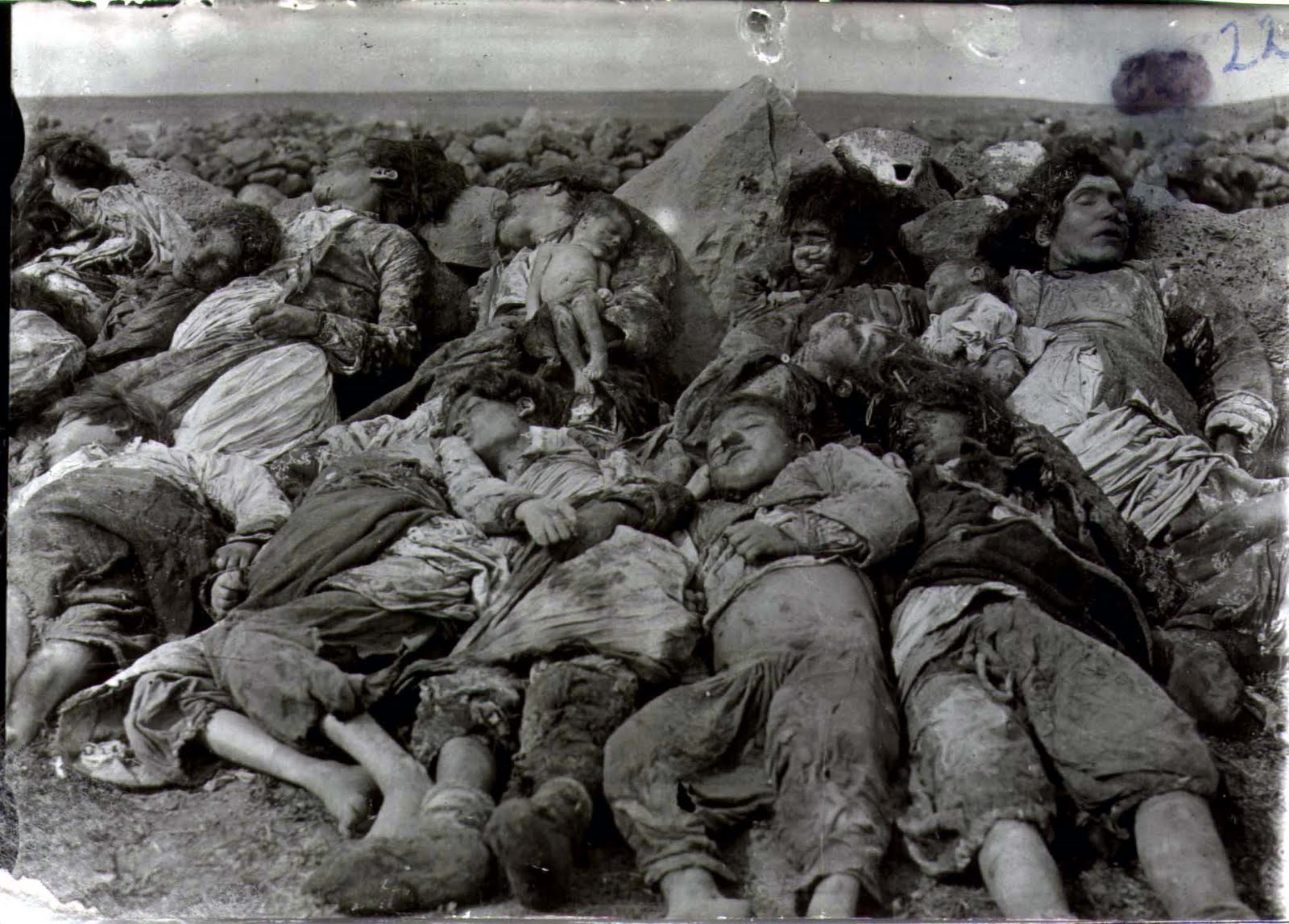
Armenian genocide
The world is a mess. It is filled with evil and brokenness. From the dive motels in San Diego to the backstreet slums of Mumbai, from the policy makers in Washington DC to the God Emperors of red dirt African countries the world is like a meat grinder feeding on humanity. Embracing chaos and futility we have become a serpent eating its own tail.

You have seen the films of people being beaten, you have heard the 911 calls of children screaming in fear that their daddy was coming and then silence, you know the reality of rape, the living death of slavery, and the indifferent retribution of institutional murder. This is all real. Don’t hide. Don’t pretend it didn’t happen. Don’t pretend that it is not happening right now as we sit comfortably by. This is the world we live in. This is the world that we allow.

Now, lets talk about the problem of evil.

First off, let us recognize the obvious: evil is a problem. It is first a problem for those who experience it. It is second a problem, at least a discomfort, for those who see it. It is third a problem for belief in a wise, powerful, loving deity.

Now, allow me to disabuse you of a stupid vile lie. Evil is not a concept. It is an historical, existential reality experienced to one degree or another by the totality of humanity. This is an important point to make. The natural habitat of discussions regarding the "problem of evil" is academia. Theological and philosophical journals. University seminars. Faux intellectual gatherings in coffee houses. Timidly poked at by youth groups and bible study groups. The discussions are generally engaged in by people sufficiently free of the grosser effects of concrete evil to have the leisure to have such discussions. And, having had my own time in such situations, the discussion is much simpler to have if actual evil as experienced by humans is reduced into a semantically contained term that can then be logically manipulated to explore different theories. The problem that should be obvious it that what is being discussed is a concept and not the actual evil that is the actual problem in the actual lives of the actual humans.

Keeping that in mind, if you forget just go ahead and remember that somewhere in your neighborhood a child probably is being molested as you read this, let us look at the discussion.

Evil is a practical problem and it is also a philosophical/theological problem. There is a strong sense in which the philosophical/theological discussion of evil is a stupid waste of time. By far the dominant witness of Christian scripture is that evil is something to be resisted, attacked, fought, and overcome rather than discussed. Discussion does not actually feed starving people or protect someone from being hacked to death with machetes. Nonetheless, we have the book of Job, which is entirely devoted to discussion of the problem of evil. Also, our actions in this world are significantly affected by our understanding of reality. So there is a place for and value to discussion. However we must always remember that we are actually discussing babies being raped and not an abstract concept.

The theological problem of evil arises when we see the evil in the world and try to believe in a powerful, wise, and loving deity. If we drop one of those three factors the theological problem disappears. Either God is not powerful enough, or not smart enough, or not loving enough to stop Pol Pot from killing most of Cambodia.

There are classic Christian traditions that have gone for each of these options depending on which factor they were most willing to lose. The absolute sovereignty, "God is in control" tradition lets go of a loving God. The free-will position significantly modifies the power of God. There is even a tradition that God is figuring it out as he goes along. Interestingly enough, that third is by far the minor position historically speaking. Christians have been more comfortable giving up God's power or love than giving up God's wisdom.

Briefly, here are some of the basic problems with the first two (the third is so rare that I don't really care to address it.)

If God is in control then all that happens is the effective will of God and every particular about the actual happenings of this world are his intended actions, thus his responsibility, thus God does evil. The response to this is that from God's perspective it is not evil. And to that I reply, from Hitler's perspective Auschwitz was not evil. This reply is more rhetoric than substance but it points in the direction of substance: if God's perfect will is done now then what is there to look forward to in heaven where his perfect will will continue to be done?

If evil is the result of free-will then we are completely responsible for all of it. Not just the bits we have individually done but all the bits that we have allowed to be done and implicitly endorse by the products we buy, by the people we walk past, by not going to the danger zones and stopping it. As far as this goes I am more amenable to this position than to the first. But, it does not really let God off the hook because it was him who gave us free-will to start with and thus implicitly endorses our free-will.

I think that the theological problem of evil presented in the classical mode is intractable given the actual incidence of evil in the world. I believe that part of the reason for this is the conceptual playing ground. It places an abstract model of God, humanity, and evil as primary. It implicitly rejects these as primarily concrete historical realities. (Here is quite a decent post on both the value and the practical inapplicability of models. It is specifically dealing with scientific modeling but the same principles apply here.)

I think that one of my biggest problems with the classical approach is the way it seems to be attempting to justify evil, that is to give it an acceptable place in this world. One should never justify evil. Evil is always evil and never good. And as such attempts to justify it should be regarded as supporting evil.

The writer of the book of Job essentially concludes that God doesn't do evil but that the situation is just too complex for us to fully make sense of. However, that author does paint an interesting picture of God fighting mythical chaos monsters as an illustration of God's will toward the world and humans. I think that the key thing here is the fight. It is the historicity of fighting.

As I have indicated elsewhere, I tend toward the position that God has formed this world out of chaos and commissioned us to participate in the completion of this forming. I mean this in a historically concrete way. Out of chaotic dissolution God has brought a significant degree of order and has brought us into being to be his means of completing this ordering. The key here is that this is ongoing in concretely historical terms. It is a project not yet complete. The classical modeling of the problem of evil assumes a steady-state philosophically abstract/eternal structure already in place. It is lodging livability complaints about a building that is still an active construction site.

Evil really is evil. This world is still a mess. But we have been commissioned and empowered by the master builder to participate in his project, to realize his master plan. As we do this in the concrete historical actions of our daily lives, in the shit and the blood of this incomplete earth, as we bring light and life and set both the slaves and the slavers free and bring true reconciliation between rapist and raped and both feed the hungry and create the systems that keep famine from happening, then we are actively solving the real problems of evil.

Some further thoughts on some of the things I have said in this post can be found here.

Sunday, April 8, 2012

Easter Is Not For Christians

I have previously expressed some......um.......dissatisfaction with some of how Christmas is treated (that is here).  Now it is Easter.

Christians celebrate Easter because they have a tradition of recognizing the event. But it seems to me that to a significant extent Christians do not fully comprehend the meaning of the event. (I can't claim that I fully comprehend the meaning of the event either, it is just so huge.)

Jesus did not die and come back for Christians. It is not a Christian event. It is a cosmic event. In Jesus' crucifixion and resurrection God brought his forgiveness to bear in the concrete historical reality of this world. That forgiveness has hit the ground. God has done this whether we recognize it or not. It has changed the whole dynamic of the world.

Many people ask, "But I am a good person. Why do I need forgiveness?" Ask that question when you look at yourself in the mirror in the morning, or while you are driving to work, or in the quiet at the end of the day. Ask that question when you remember that feeling that you just don't measure up, that you don't really make any difference, that it wouldn't really make any difference if you weren't there. You feel this because you know that you are supposed to measure up (even people who had affirming families feel this.) You feel this because you know that you are supposed to make a difference. You feel this because you know that there should be value in you being here. Those of you who have really accomplished things know that accomplishment does not banish this feeling.

We are supposed to make a difference, a huge difference. We were designed to make this world perfect. Every day we fail and we know it.

That is what forgiveness is for. That is what Easter is about. God always forgave us for our failure. In Jesus' crucifixion and resurrection God brought his forgiveness to bear in the concrete historical reality of this world. It did not change God's heart. It transformed the order of creation. God's eternal forgiveness has intersected time in the universally transforming event that Easter remembers. Easter is for the cosmos. Your failure has been forgiven not just in principle but in fact. (A glimpse at what this says about the personality of God is here.)

Easter has nothing to do with eggs, or bunnies, or chocolate, or sunrise services. Easter is about a cosmic revolution that God effected nearly 2000 years ago in a backwater province of the Roman Empire.


Easter is not for Christians. Christians are those who have seen and thereby have experienced and been transformed by this universal explosion and who cannot help but show it to all the others who it effects but have not seen it.

Easter commemorates God's concrete forgiveness of our failure to interact with this world in the way he designed us to. Easter looks forward to Pentecost. Pentecost commemorates the event in which God empowered us to no-longer fail but to truly measure up to our purpose, to truly make the difference we desire to make, to be fully alive and crammed full of exactly the sort of value we know that we were made for.

Thursday, April 5, 2012

Leviathan

can't breathe
the beast it keeps coming
hold on a little longer
ahhhgh
why can it keep coming
cut again
the walls so close
attacking through water yet it moves freely
tired, hold on
moving to my side
thrusting arc, too slow
only a scratch, but
at least a scratch
futility so thick I can feel it
shock as it hits me
it is home
it's home
not mine
aching body
pain
it plays with me as I struggle to fight
fight through thick water
struggle to breathe
the beast keeps coming

why don't they help
why don't they kill it
they keep yelling but the sound doesn't travel

it connects hard
my stomach wrenches

why do they hold the knife that way
I can control it better with this grip
push through the thickness
another scratch
it doesn't care
it is so quick
here it comes
most of the blow on my blocking arm

get up, get up
why didn't we get better weapons

my leg
pulling
pulling
down

they cut

release

struggle to stand
hold on, a little longer
I can control the knife better with this grip

Sunday, April 1, 2012

Theology Is A Deliverance Ministry

Being Christian does not get you into heaven. That is not the point of Christianity. At least it wasn't until Christianity lost it's way and needed a punishment/reward system to compensate for it's waning focus on the centrality of Jesus' work of effecting the forgiveness of God in the concrete history of the world that reinstated humanity as the very presence of God by the indwelling of the Spirit of God and the participating instruments of God's plan to bring the creation to completion (see here) (also, the length of this sentence is a tribute to my partial German heritage).

The work of Jesus is universal in scope for all things are in him.

Yet this complete salvation is incomplete. This universality of salvation is in principle. Just as the forgiveness of God has been an in principle reality from the first instance of disobedience. Though God's forgiveness has always been there it still needed to have its concrete establishment in the actual history of the world for it to take effect in the world. In the same way, the universality of this forgiveness and redemption must work out into the actual dirt and blood of history. Though in the incarnation all of humanity has been drawn into the life, death, resurrection, and ascension of Jesus and been opened to the life of the Spirit this reality has yet to actually overcome the futility and chaos that pervade the concrete reality of history.

This points to the purpose of theology and evangelism.

Evangelism is the wider end of theology. Where theology deals with the fine grains, evangelism interacts on the level of large chunks but they are on the same continuum. They are both addressing the actual structure of reality.

If redemption is universal then why theologize or evangelize? If what we think and believe has nothing to do with our ultimate destiny then why concern ourselves with it? If "God Gets Everyone" then what is the point of working hard?

First, because Jesus tells us to proclaim the good news.

Second, because our ultimate destiny was never the issue. The issue has always been the fulfillment of creation, so the objection is really baseless in that it assumes a falsity.

Third, we proclaim the Gospel, we work hard to accurately grasp reality because our purpose is active participation in this plan of God for creation.

If our beliefs are inconsistent or are at odds with reality then we suffer cognitive dissonance. We must exert a tremendous amount of creative mental energy to hold together ideas and beliefs that do not fit.

Now, imagine how much God given creative energy would be freed up if we were delivered from false ideas. Energy that could then be directed toward our actual purpose in this world: our active participation in bringing the universal redemption enacted in principle in Jesus into the concrete blood and dirt of history.

Theology is a deliverance ministry. It releases the the children of God from the demonically onerous futility of screwy ideas.

Evangelism is the process by which the universal body of Christ becomes self-aware.

Thursday, March 8, 2012

Shameless Foundations: Part 3-Things Go Wrong

Part 1
Part 2

So God chose to make this world and put us in this world. God has largely ordered the cosmos out of his primordial lump of chaotic stuff but a significant degree of disorder remains. Into this he decides to carve out a a bit that looks remarkably finished. Into this corner of the world God then sticks creatures that are made out of the stuff of this world and makes them alive by putting his own life into them, making these creatures become his own very presence in this world, not above this world but in this world. He then makes clear why he made these creatures with a great commission: "Go out from this corner, become numerous, and bring this world to completion."

And then we ate a bit of fruit, started blaming each other, and lost the ability to do what we were designed to do. Instead of us going out and bringing the chaotic futility in the world into useful structure, we went out and became subjected to that very futility.

Now, even though we had the breath of God in us that gave us the sort of life force that would enable us to carry out our commission we did not have all that was needed. However much of himself God put in us was enough for us to do our job but we still needed instruction on how to get that job done. We can see our lack of knowledge in that God gave us a command: "do not eat from the tree of the knowledge of good and evil, if you do you will die." This is something important that he seems confident that we would not know otherwise. I don't think that this sort of lack of pragmatic knowledge about what may be dangerous in the environment is all that is going on. It would seem that God's direction to us to "finish the earth" would indicate that there is a completed state that God is expecting. Furthermore, it appears that he has some manner of strategy whereby to achieve it that he hasn't built into us, neither into the earth stuff he made us out of nor into the bit of himself that he put into us. So to be successful at the purpose for which we were designed and put on this earth we would need to obey God.

Okay, wait. Where did this obey stuff come from? Remember that this story does not necessarily intend to be a historical account of some dude named Adam and his hot broad Eve and whether or not they had bellybuttons. The primary point of this story is to get at what is going on in the world in terms of God, humans, the rest of the world, how problematic the world is, and that the world is at odds with how we expect it should be. So the tree might not actually be a magic apple tree that takes away our superpowers. It may just represent something else. Now remember that the tree is not the tree of evil, we do not consume evil by eating of that tree. It is the tree of "the knowledge of good and evil." Knowing both good and evil. Consuming this "fruit" is taking into ourselves the distinction of good from evil. We gain our own understanding of right from wrong. We have a term for this: systematized morality or ethics. Why is it that this would lead to death?

Well, remember the thing that I haven't mentioned yet? There was another tree in the garden. The tree of life. Remember what made us living beings? God breathing into us his Spirit. In the two trees the story places these two things in opposition: knowledge of good and evil (ethical regulations as such) and life (being the very presence of God in the world.) Now, God is not us, God made all of this, and God has a plan and strategy for how to finish what he has started. For us to know what this plan and strategy is he has to tell us, for us to execute God's plan and strategy we need to obey him. If we are obeying a set of ethical regulations are we obeying God? No, we are obeying a set of ethical regulations. If we are not obeying God and his strategy and plan for this world are we truly his presence in the world? No, in disobeying God we set ourselves over against his plans for the world and in doing so we lost that which made us alive (the tree of life, the breath of God), that which made us the very presence of God in this world. Having lost that life force by which we would have been able to subdue the useless chaos of the not yet complete creation, we became subjected to its futility.

Out in the chaos of the world, unable to break free of the stupid futility, useless chaos and weeping and wailing and the gnashing of teeth.

Part 4

Tuesday, March 6, 2012

Shameless Foundations: Part 1-The Beginning

I was planning on holding off starting this series until I had finished the "Running From A Shameful Gospel" series: Part 1, Part 2, Part 3.  I had my strategy planned out to get the list of criticisms all out before I started the constructive work that I am starting here. The problem is that it is really difficult for me to critically analyze something that I have left behind. At some point I will go back and finish that series. But, after I published my last post I realized that I had better get some constructive "This is what I believe and these are the foundations, see I am not quite the sort of dangerous raving heretic you are starting to think I am" sort of material up here in an attempt to not completely alienate conscientious Christians.

This is what is going on in the world.

God chose to make this world in the way that he decided to make this world. He made this world rather than some other world, which he could very well have done. In fact, he my very well have done so but that is not particularly relevant to us because this, in fact, is the world that he put us in. He may very well have put creatures very like us in other worlds but neither is that relevant because, again, we are, in fact, here. This is important to remember this lest we decide to turn God into a set of principles and derive an ideology from our interpretation of those principles. This world derives from the contingency of God's decision making and not from some set of supposedly absolute principles. God can do whatever God wants to do for whatever reasons God wants to do it. Who are we to tell him otherwise?

So, God decided to make this world. He then got down to it however he got down to it. Whether he did it fast or slow or a little here a little there it doesn't really matter. I have no intention of embroiling myself in the ideologically prejudiced (on both sides) street fights (picturing "Anchor Man") as to how the universe came into being. At a deep epistemological level we can't really prove anything and even if someone happened to "get the right answer" there is no way we could be sure that it was in fact right. Human knowledge is limited not only in the amount of stuff we can know but in the surety we can actually have of the accuracy of that knowledge. So stand back and let me work what I got.

The point of the creation story(s) in scripture is not to give a modern textbook blow-by-blow of what actually happened. The people who wrote them and read them didn't care about that. The writers cared about God's relationship to this world and mankind's place in it. Now, telling a story talking about that in terms of the original formation of everything seems to me like a pretty crunchy thing to do. They wrote it, we didn't, who are we to complain. So what do they say?

God's creative movement in this world constitutes pushing back, even subverting the "formless and void." Actually a better modern translation of this would be "useless and chaotic." Now these adjectives describe the initial state of the cosmic "all of this." The picture is like God started by just kinda throwing a lump of stuff out there and it is a big mess which he then begins to form. Right off there is the clear impression the the Spirit or Breath has a very important function in policing the useless chaos (the "deep" was a particularly potent image of the power of that useless chaos the power of meaningless futility.) So God progressively orders the world bit by bit and then humans happen....

Part 2 
Part 3 
Part 4

Monday, March 5, 2012

A Rabbi, An Imam And A Pastor Walk Onto A Stage....: Part 2

Here is Part 1

In a strict sense Christians don't worship the same God. From an epistemological viewpoint what we worship is our idea or understanding of God and there are as many of those as there are people. All that a human has access to as far as worshiping God is a participation in worship empowered by the Holy Spirit. Now since this is a general human condition there is no self-evident reason to limit or segregate this by sociological boundaries. If there are boundaries they would be set by the selective empowering of the Holy Spirit to worship. And the only legitimate way to assess any possible boundaries is to assess the empowering of the Holy Spirit. It seems to me that we do not have access to this data, at least with respect to worship.

We could, however, look for Holy Spirit empowerment in other more possibly verifiable contexts and postulate that Holy Spirit empowerment in these areas implies empowerment in the area of worship (though I believe a case for this could be made I will suffice to observe here that such a case is assumed to apply within the sociological bounds of Christianity.) This leads us to establishing criteria for assessing the empowerment of the Holy Spirit; in itself a tricky task. As with establishing any criteria we want to include everything that is pertinent without including anything that would give a false result.*

For the sake of argument I will propose that the fundamental work of the Holy Spirit is most simply to enact the "Thy kingdom come, thy will be done" of the Lord's prayer and that the multiple descriptions of the action of the Holy Spirit in scripture are examples of this fundamental work. From this I posit that an act that makes the earth more like heaven is empowered by the Holy Spirit. What follows is that if a Muslim acts in such a way that the earth becomes more like heaven then they are doing so by the empowerment of the Holy Spirit and that it is then reasonable to assume that they may very well, by the same empowerment, participate in true worship of God.

All we need then is a single example of this empowerment in more than one of the religions represented to falsify the distinctions upon which the interfaith discussion was based. We lose our beloved us/them beliefs. We are stuck with all just being people.

The obvious criticism of this line of reasoning is, "What about doctrine (a.k.a. believing the right stuff)?" To which I would respond, "What about doctrine?"

Doctrine is a network of logical propositions to which we may or may not give mental assent. If we set this mental assent to logical propositions as prior in importance to the work of the Holy Spirit then my reasoning falls down. However, buyer beware. With this we run into some at least equally severe problems. What doctrine is right doctrine? How right does it need to be? How much is enough? Who gets to make these determinations as to what is actually right and enough? What constitutes mental assent? Moreover, how could we possibly know with surety that we had the right answers to these questions; and, what difference would it really make other than enabling us to observe for ourselves who is in and who is out?

I do not see a really good reason for setting the priority this way. First, I don't see a good reason from the scriptural data since it appears that doctrine is derived from the Spirit rather than the other way around. And second, in the application, I just don't see anything of value gained and quite a bit of otherwise unfounded problems introduced.

This whole analysis leads to some very difficult implications. First, in a very important sense it places Christianity on a par with all other religions because it cuts the "in/out" pie on lines that show no intrinsic regard for religious commitments. From this a whole host of other Christianity-specific problems arise such as: why be Christian, why evangelize, what about the uniqueness of Christianity, isn't believing the truth important? These are all good questions to ask. So, let us ask them. If my reasoning holds,` then why be Christian, why evangelize, what about uniqueness and the importance of truth?

*This establishment of Holy Spirit empowerment criteria is something that I would be very interested in hearing from readers on.

Sunday, March 4, 2012

A Rabbi, An Imam And A Pastor Walk Onto A Stage....: Part 1

Christian/Muslim discussion seems to be a pretty hot topic in some circles right now. Two circles in particular seem evident, 1) what passes for Christianity in US politics interacting with Islamic states, and 2) progressive Evangelicals attempting to figure out how to stay faithful to the Gospel within their progressive commitments. There are other circles but these seem to me the dominant voices. First, I have no clue if there are circles within Islam where this sort of dialog is such a big thing. Also, I have an interest in the dialog but I am neither political (as in I hold out little to no hope for actually effective political solutions to anything that really matters) nor am I particularly Evangelical (though that is a bit tenuous, since, like Canadians over against Americans, Evangelicals are really not sure what it actually means to be Evangelical except that they are not Catholic......maybe.)

That attempt at incisive cleverness aside; a rabbi, an imam, and a pastor walk into an auditorium......

A Christian Church that I frequent recently held a panel discussion at the Sunday morning service. Now this panel included a rabbi, an imam, and a pastor. The question to be addressed was, "Do we all worship the same God/god?"

Now, I have some rather particular and somewhat strong positions on the execution of a Sunday morning service (I will expose these at some point in the future as I foray into the field of pro-bono unsolicited blog-based church consulting.) Interestingly enough, this panel discussion sets a few of these positions at odds with each other and the result is interesting. While not directly proclaiming the Gospel, the panel had the opportunity to demonstrate the Gospel in action while at the same time being excellently timed marketing.

As it happens, I was, in the wickedness of my heart, earning a living and thus unable to be present at the meeting. However, I spoke to several people who were there to get an idea of how it went and what happened. I have gathered that it was mainly a PR press conference where an actual direct answer to the question posed was politely avoided. One of the people that I talked to said that the pastor commented on intimacy with God through Jesus and the rabbi and imam essentially said, "Great, but we don't need Jesus for that intimacy."

I think that the whole question and discussion was misframed. I believe that, judged on deeper criteria than strictly sociological assessment the distinctions between the participants are false to the discussion at hand (maybe "false" is too strong a word, possibly "misleading" would be better.)

More to come.

Do you hate cliffhangers with subsequent posts more than ridiculously long individual posts?

And well, here is Part 2

Thursday, March 1, 2012

You Don't Get To Choose Your Cross: Part 2

Here is Part 1

 And here is where it gets good:

We must neither cower in illusions of perfection nor capitulate to unrighteousness. Rather, continually recognize the contradiction into which we have been thrust, the true intolerable confluence we embody. We must throw ourselves into the struggle for it is in the very midst of this struggle that we are a witness. It is here that the judgement of eternity falls with creative power on the sin of the world. This is living redemption, subversive and creative.

To give an image from parenting: an example of perfection is of no value to our children since they themselves are not angels, as well, capitulation to destruction is a disservice to them since they are alive. Rather, they deserve to see the struggle and learn to fight the fight of a forgiven sinner, of a wounded soldier who will not leave the battle because they are the breath of God in a broken mind, the fiery core in a wayward heart, the very presence of God in a suicidal world.

We live the struggle in full (though through a mirror dimly) view of eternity. That fundamentally alters our current reality. The pain of the struggle becomes not something to be reflexively avoided but rather a powerful elixir to be wisely engaged, like climbing a mountain or giving birth. We embody the brokenness of the world and the light of eternity, birth-pain is inevitable and in it we are born along with the new heavens and the new earth.

God, in his love and wisdom, has placed us in the world, in this intolerable situation. He has however called us to not be of this world. What can this possibly mean? We are sent neck deep into the quagmire in order to be an actual presence here that is not of this place.

What can this subversive redemption be while we remain active if unwilling participants in the brokenness of that which we are sent to redeem?

We embody the contradiction, the intolerable confluence of life and death and it is in and out of this struggle that redemption becomes concrete, that the love of eternity comes into the very dirt of this world.

Tuesday, February 28, 2012

You Don't Get To Choose Your Cross: Part 1

We have recently been exposed to the shortcomings of Apple and their subcontractor’s treatment of labor. And I am a little surprised that I have seen no commentary from my “social justice” friends (who mostly use Apple products.) So I will let loose on this aspect of “justice” and our situation in the world. Now these revelations are nothing new nor is the situation by any means limited to Apple. It is pervasive. At nearly all levels of production. In this real world no one gets their “stuff” without someone being abused.

We are all inextricably enmeshed in the banal evil of the world, even if we do not kill, steal or commit adultery we remain fundamentally complicit in maintaining oppression, slavery, wholesale murder. By living in the world we unavoidably participate in the systemic sin of the world. If we as Christians do not find this intolerable it is because we have consumed the opiate of religion.

Some will object: If this is true, how then did Jesus ever avoid sinning in his lifetime? This is not an attempt to avoid addressing the sin of this world and what we might do about it, but really question about what is and is not sin. It cannot be "a sin" to unavoidably participate in the systemic sin of the world. Our specific actions have to be sinful, or not, but we cannot be systemically guilty of sin in this way without also indicting our Saviour.

To this I would ask: to what extent did Jesus bear our humanity, to what extent was he one of us, to what extent then are we now in him? To the extent that Jesus was a Jew, he was under sin (Rom. 3:9), to the extent that Jesus was part of everyone he was under sin (Gal. 3:22, yet, nevertheless he is God's redemption from that sin) and more pointedly, 2Cor. 5:21 "God made the one who did not know sin to be sin for us, so that in him we would become the righteousness of God." This is not in my mind a conclusive refutation of this concern, rather an observation of a greater complexity at work. The issue remains problematic on many levels. However I do not have this concern. I do not necessarily have a problem with Jesus implicitly participating in a form of sin common to all humanity yet fully obedient to the Father and furthermore declared righteous by the Father and in so doing opening redemption to all of humanity that too is found under sin. I do not depend on getting all of Jesus' "A's" imputed to my report card, rather I hold to the righteousness declared over me by the Father on the basis of Jesus' obedient faithfulness.

Others may question whether we really are inextricably enmeshed in the banal evil of the world.

This is the banality of evil that I mean. I am no Marxist but the capitalist reduction of humans to units of production and consumption is hardly righteous. The purchase of corn or soy products empowers economic and environmental oppression. The purchase of gasoline supports evil regimes and bio-fuels have more than doubled the price of food globally leading to starvation. The vast majority of cotton, chocolate, coffee comes on the back of slavery. The purchase of any commodity that has exploitation in one of it’s production regions supports that exploitation. Our taxes support not only the good of our governments but also the evil.

The situation is much more complex and interesting when you remember that making money, trading food, using gas, etc... all also help people prosper and are significant means with which to treat each other with kindness. We work to be good while unavoidably participating in evil.

Here is Part 2

Wednesday, November 16, 2011

The Long Silence

This is what concerned me about starting a blog: The Long Silence. It is not that I have given up the search, it is just that the rest of my commitments (family, work, The Charis Project) have suddenly taken up all my time and energy so now all I can do is experience the reality of the gospel in midst of my life or not. It is kind of a spiritual "put up or shut up" situation. If the gospel is for real and something that is without shame it needs to keep being real even when you are not looking at it. That is, if the gospel doesn't continue to make a real difference in your life even when you are not thinking about and meditating on it then the gospel you are dealing with is a load of dingo's kidneys and you should start looking for a different one.

Life is the original research of theology.
Related Posts Plugin for WordPress, Blogger...